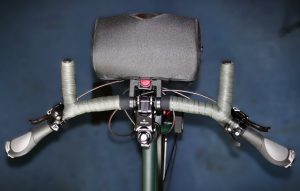
I’ve not long returned from spending eight days in Denmark. I visited four cities and travelled between them by inter-city trains. Each of the trains I was on had compartments for cycles. Those needed to be reserved in advance. They were mostly well used with people using them for both short journeys and touring cyclists with camping gear on the longer journeys. The carriages were laid out with fold up seats which the bikes were strapped in front of. As Danish trains are wider than ours this allowed for bikes to be stored on both sides which could allow for up to eight in each carriage. I also noticed that some buses and metro carriages have space for cycles.
The biggest difference from home (at least what I noticed) was the cycling in cities. Almost every road had a dedicated cycle track running alongside each side of the carriageway. I don’t think I saw one car using the cycle paths to overtake even though they were not physically separated, apart from painted lines. Traffic lights are set to allow for the flow of cycle traffic as well as cars. At many junctions there are more cycles than cars passing through and the lights seem set to account for that, giving longer times for bikes to get through. This means that there is a much smoother movement of bikes. At some places the stream of bikes appears to travel as fast as motorised traffic. This can seem quite intimidating but I would think that once you were accustomed to cycling there it would become an easy and enjoyable way of travel. The variety of cycling styles attests to this. In any group of cyclists there were all sorts, from older cyclists through to parents with children on their own bikes or in child seats or crossbar mounted seats, cargo bikes or towing trailers loaded with children or cargo. There’s also a fair mixture of people in business suits and lycra. Bikes come in all shapes or forms from electric ones to vintage uprights. There’s also a fair smattering of scooters, trikes and even unicycles all taking their riders to and from where-ever.
Copenhagen, as Denmarks biggest city, seemed to have the most bikes. Outside the stations and along most streets were thousands of bikes, parked up at all times of day. Even the quieter city centres like Aalborg or Esbjerg had the same level of cycling infrastructure. Both these were less busy in the centres and there were more car free areas. Cycles were not banned from most streets unless it was a designated pedestrian only area. Cyclists and pedestrians seem to be quite capable to get on together, probably due to the fact that there is an understanding of the priority that walkers have over cyclists. Often I would be waiting for cyclists to pass only to realise that they would always stop to let pedestrians go first. It’s something which doesn’t always happen here in Scotland.
A common sight in the smaller towns like Aalborg and Esbjerg are guided cycle tours. These were led by someone with a microphone and the participants all had earpieces. Like the walking tours which are ubiquitous, they could often be seen at scenic spots or waiting for stragglers to catch up. Some of the ones I saw had up to 30 bikes all travelling together. It may be there were tours in Copenhagen too and I just didn’t notice them.
I didn’t spend much time outside the cities so I didn’t get much of a feel of how cycling in the country-side is. I did see publicity for cycle routes, especially around the coasts so I would think that it is quite common and extensive.
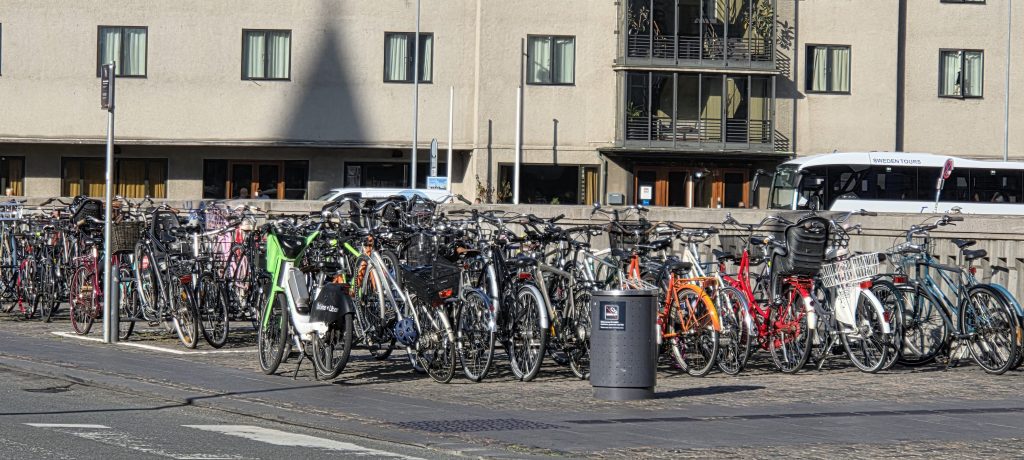
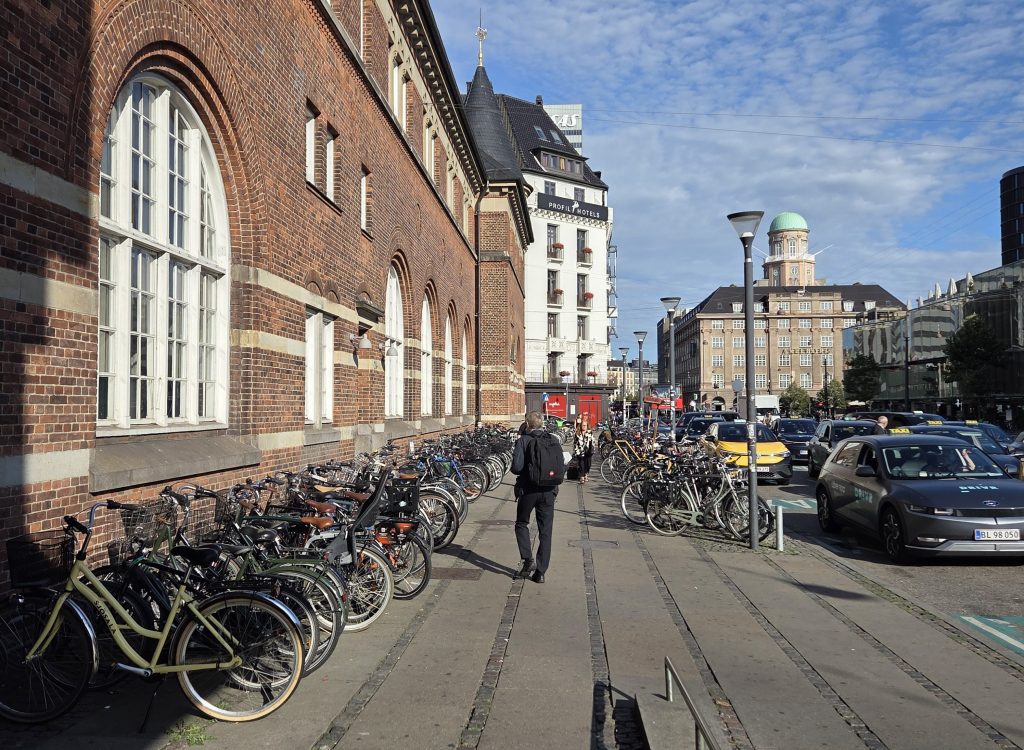
cycle parking in Copenhagen
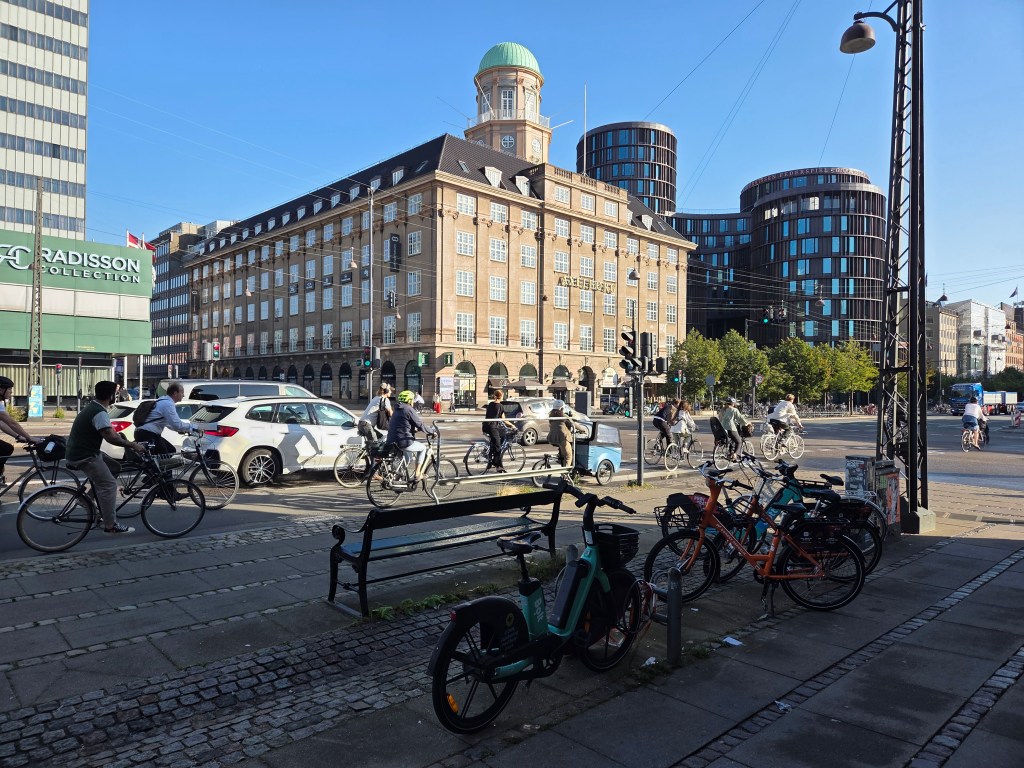
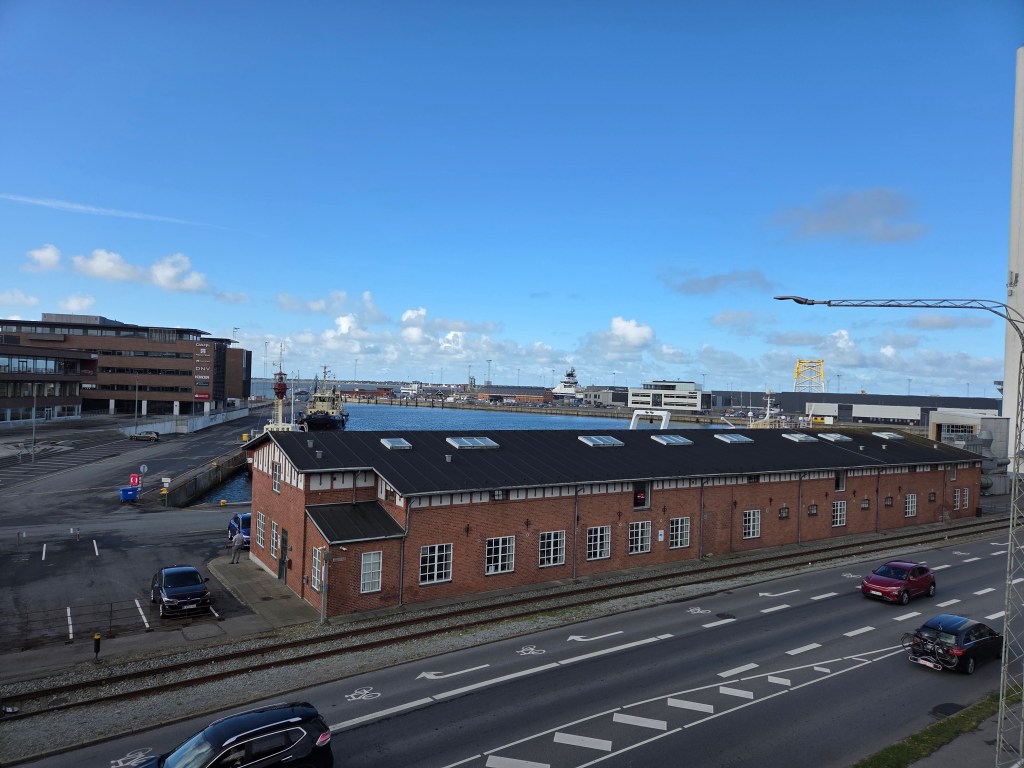
city cycle paths
 Just Me - On my bike